
Introduction
Sleep is an essential physiological process that supports memory consolidation, cognitive performance, emotional wellbeing, metabolic homeostasis and physical restoration.1,2 Sleep deprivation (defined as insufficient sleep) is common among medical students due to academic pressures, clinical responsibilities, examinations and shifts, and irregular circadian rhythms, among other factors.3,4 Transition from academic to clinical education can further disrupt sleep patterns due to early morning reporting or night duties.1–13 Poor sleep is prevalent among medical students, impacting their cognitive performance, psychological wellbeing and metabolism.1–10 Therefore, understanding the effects of sleep deprivation is crucial for student wellbeing as well as safe and competent patient care.1,2,5–10
A systematic review and meta-analysis encompassing 109 studies and 59,427 participants revealed that 55.64% of medical students across different countries experience poor sleep quality.3 One-third of the participants had excessive daytime sleepiness, while total sleep time was estimated at 6.5 hours per night on average.3 In other words, insufficient sleep and poor sleep quality are common among medical students worldwide.3,4 Indeed, a previous meta-analysis also demonstrated that more than 50% of medical students across different populations experience poor sleep quality.4
It is essential to distinguish between sleep deprivation, sleep restriction and disrupted sleep.1 Whereas sleep deprivation refers to a reduction in total sleep time, sleep restriction implies a decrease in sleep opportunity.1 Disrupted sleep, in turn, entails a misalignment between circadian rhythms and the sleep-wake cycle.2 The consequences of these sleep disturbances can overlap considerably, often impacting alertness, cognitive performance and psychological wellbeing.1,2 Indeed, sleep loss can affect executive function, attention, memory, mood, emotional regulation and metabolism.1,2 The effects of disrupted sleep on cognitive performance have been particularly evident in medical education and training.1 This review will discuss some of the most profound effects of sleep deprivation on medical students, including implications for patient safety. In addition, individual and institutional interventions will be explored, as well as research gaps and future directions.
Methods
The relevant literature about sleep deprivation and sleep disturbances among medical students was identified via PubMed/MEDLINE, Scopus, and Google Scholar databases. In addition, the bibliographies of the included articles and systematic reviews were screened. The literature search was performed using keywords related to my research and the inclusion of articles published in the 2015-2026 timeframe. However, the research also included older studies if they appeared relevant to the investigation. The articles published recently were prioritized, including systematic reviews and meta-analysis, as well as other research types such as observational or experimental studies exploring the relationship between sleep disturbances and cognitive, metabolic, and psychological outcomes in medical students. The relevant literature was analyzed, and the key findings were synthesized in a narrative report.
Why Are Medical Students Vulnerable to Sleep Deprivation?
Students in medical education encounter a wide range of barriers to healthful sleep, including academic pressures, clinical responsibilities, examination-related stress and shifts, as well as lifestyle and environmental factors.1–13 A combination of these factors can lead to chronic sleep deprivation among medical students, which, in turn, can compromise student performance and patient safety.1–13 The mechanisms by which these factors contribute to sleep loss are multifaceted and can often interact.3
Academic pressures can encourage students to sacrifice sleep in favor of additional hours of study.3 Similarly, shifts, early morning reporting, long hours in hospitals and intense clinical training can limit sleep time and affect sleep quality.1–13 As medical students face high expectations to succeed, the pressure to maintain satisfactory academic performance can be considerable.3 Additional stressors include exposure to mortality and morbidity, as well as ethical and legal dilemmas. Such challenges can cause psychological stress and impact nighttime sleep and daytime alertness.10–13
Lifestyle and environmental factors, in turn, can interact with academic and clinical barriers to compound sleep loss. Irregular eating patterns, excessive use of electronic devices, caffeine consumption and lack of physical activity can be particularly detrimental to sleep.13 It is essential to note that individual behavior is often affected by institutional factors. In other words, the organizational culture of medical education and clinical settings can play a significant role in student sleep patterns.3
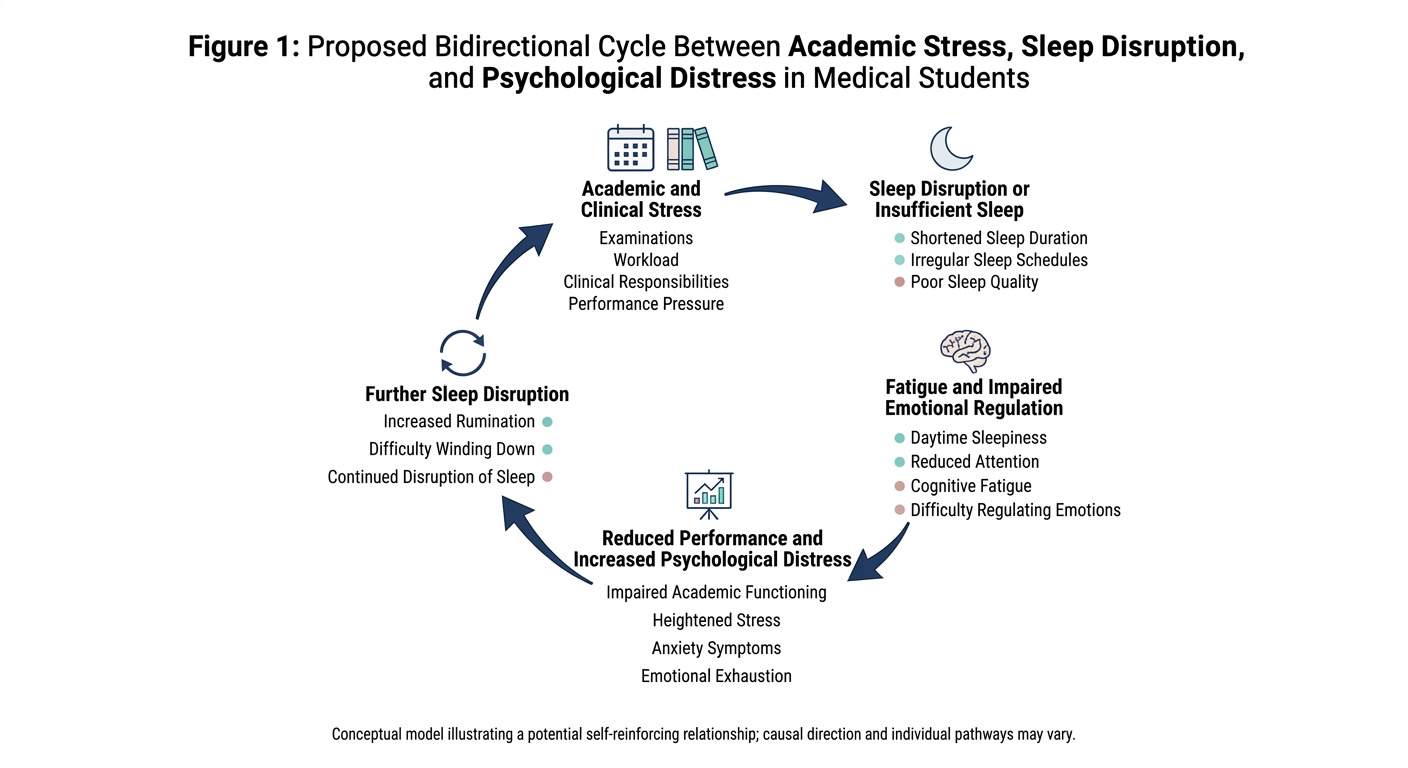
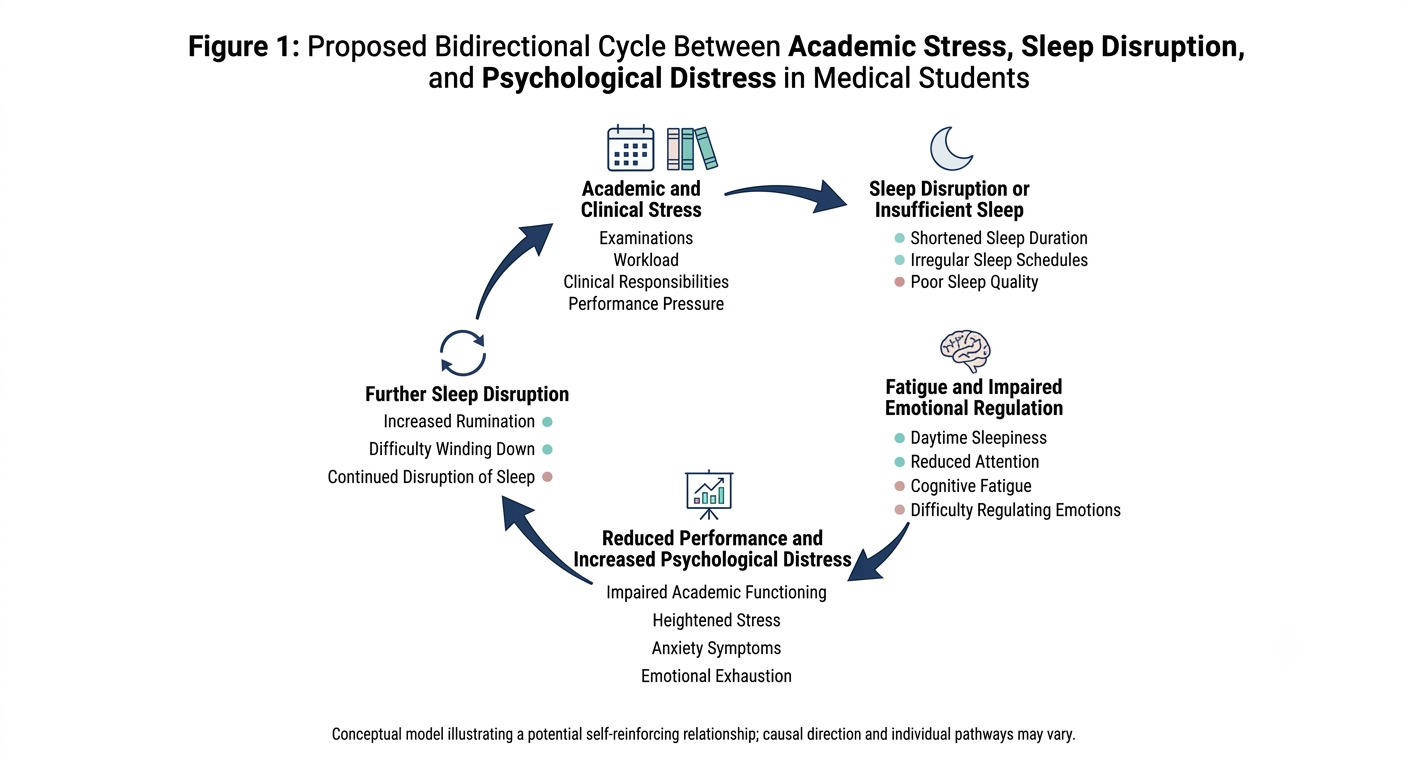
Academic and clinical factors interact with lifestyle and environmental ones in complex ways to undermine student sleep. Poor sleep, in turn, can have deleterious effects on learning, performance and wellbeing and create a self-sustaining cycle.1,2,5–10 Indeed, the pressure to perform can encourage students to sacrifice sleep for additional hours of study, further impairing performance.3
Neurocognitive Effects
Sleep has an important role in aiding attentiveness, learning, memory and higher cognitive functions. Sleep deprivation and sleep restriction can cause issues with these cognitive functions, which could affect both learning and clinical training. The severity of these effects will depend on how much sleep is lost, individual differences and the type of cognitive function. Much of the evidence comes from the general population, meaning the relevance to medical students requires cautious interpretation.1,6–8
Attention
Sustained attention is an important function. It allows individuals to stay alert and perform consistently when completing tasks that take longer to complete. Medical students need to stay attentive during their learning, practical sessions, clinical assessments and patient interactions. A meta-analysis including 61 studies with 1,688 participants identified poorer neurocognitive functioning following sleep restriction, with sustained attention and executive functioning among the affected domains.1
Some studies have looked at the impact of one night of sleep restriction on sustained attention. A systematic review and meta-analysis of 44 studies published in 2024 found that sleep restriction, involving approximately 2–6 hours of sleep opportunity, increased perceived sleepiness and impaired sustained attention. Participants responded more slowly and experienced more attentional lapses. The analysis did not identify statistically significant effects on choice reaction time, cognitive throughput, working memory or inhibitory control after one night of sleep restriction.6 This suggests that not all cognitive functions are affected equally by acute sleep restriction and that sustained attention may be particularly vulnerable.6
Sleep deprivation may reduce vigilance in medical students, potentially affecting learning, patient observation and the identification of important clinical information. However, the severity of these effects cannot be inferred directly from studies of general adult populations. Further research in medical education settings is needed to determine the impact of short-term sleep restriction on attention.1,6
Memory and Learning
Sleep plays an important role in memory formation. Both rapid eye movement (REM) and non-rapid eye movement (NREM) sleep contribute to memory processing. Insufficient sleep around the time of learning may result in difficulties retaining information. This is particularly relevant to medical students, who must acquire and retain substantial amounts of information.7
A systematic review and meta-analysis examining the effects of sleep restriction on memory formation was published in 2024 and included 39 reports involving 1,234 participants. It found that sleep restriction, generally involving 3–6.5 hours of sleep per night, was associated with small reductions in memory formation compared with normal sleep opportunities of 7–11 hours. The review also identified effects on memory encoding and consolidation.7 These findings suggest that sleep restriction can affect memory formation; however, the magnitude of these effects specifically among medical students remains uncertain.7
Medical students must learn substantial amounts of theoretical material and integrate new information with clinical experience. Sleep-related difficulties in memory formation could therefore affect learning. However, the extent to which these effects influence examination performance, long-term memory retention and clinical skills among medical students remains unclear.7
Executive Function and Clinical Reasoning
Executive functions include working memory, cognitive flexibility, inhibitory control and processing speed. These processes allow individuals to plan, integrate information, evaluate options and make decisions. A meta-analysis published in 2025 assessing the effects of sleep loss on core executive functions reported impairments across several executive-function tasks, although the severity of the impairments varied according to the cognitive domain and task assessed.8
This evidence should be interpreted with caution because much of it comes from general adult populations. Although executive functions are important for complex learning and clinical reasoning, the effects observed in these populations cannot automatically be assumed to occur to the same extent in medical trainees. Sleep loss may interfere with retaining information, switching between diagnostic possibilities and performing complex tasks efficiently. However, direct evidence linking sleep restriction to specific executive-function deficits and clinical reasoning outcomes in medical students remains limited.8
Future research should investigate these relationships using validated cognitive assessments alongside educationally relevant outcomes, such as examination performance, diagnostic reasoning and performance in simulated clinical scenarios. Longitudinal and intervention-based studies would help determine whether increasing sleep duration and regularity improves cognitive performance among medical students.
Metabolic and Physiological Consequences
Metabolic changes
Sleep deprivation may affect metabolic health through various pathways. Experimental studies have found that sleep deprivation can lead to impaired glucose regulation, changes in appetite regulation, neuroendocrine responses and inflammation. This provides us with knowledge about how sleep deprivation could potentially affect medical students metabolically; however, it is based on evidence from healthy adults, not medical students.2,14
Glucose regulation and insulin sensitivity
Insulin sensitivity describes how sensitive peripheral tissues, such as skeletal muscle and adipose tissue, are to insulin. Therefore, low insulin sensitivity means more insulin is required to regulate glucose. Evidence from experiments shows that sleep restriction can impair glucose regulation and glucose tolerance via insulin. For example, seven nights of sleep restriction (5 hours of sleep opportunity) in 20 healthy young males resulted in decreased insulin sensitivity, measured using an intravenous glucose tolerance test and a hyperinsulinaemic–euglycaemic clamp. This was also associated with impaired glucose tolerance and a decreased disposition index, indicating impaired insulin secretion relative to the reduction in insulin sensitivity.14
Pancreatic beta-cell function involves beta cells secreting insulin in response to rising blood glucose levels. If insulin sensitivity decreases, insulin secretion may increase to compensate. If this compensatory response is insufficient relative to the degree of insulin resistance, glucose tolerance may be impaired. There is evidence that sleep-restricted conditions can result in impaired beta-cell function. However, these findings are based on short-term studies, and we cannot conclude that sleep deprivation will invariably cause beta-cell dysfunction or diabetes. Further research into the long-term clinical implications is needed.2,14
There are several potential pathways that could cause these changes in insulin sensitivity. Sleep restriction has been associated with altered autonomic activity and increased evening cortisol concentrations. Both could lead to changes in glucose homeostasis and insulin action. Circadian rhythm disruption may also alter the normal timing of glucose regulation, hormone secretion and food consumption.2,15
Appetite regulation: Ghrelin and leptin
Sleep deprivation may affect energy balance by altering appetite-regulating hormones. Ghrelin is predominantly secreted by the stomach and stimulates feelings of hunger. Leptin is mainly secreted by adipose tissue and signals energy availability to the hypothalamus; it generally promotes feelings of fullness. A study of healthy young males found that sleep restriction was associated with decreased leptin concentrations, increased ghrelin concentrations and increased hunger and appetite.15
This could help explain why sleep deprivation may increase energy intake. However, these effects can depend on several factors. Ghrelin and leptin concentrations may vary with sleep duration, energy balance, time of day, sex and other factors. Appetite is also regulated by multiple behavioural and physiological processes. Therefore, changes in ghrelin and leptin should be viewed as one part of a broader regulatory system.2,15
Medical students may experience disrupted and irregular sleep patterns, late-night revision and less structured meal times. These factors could plausibly combine with sleep deprivation to increase metabolic risk. However, studies would need to be conducted specifically in medical students to establish the extent of these effects.
Inflammation
One pathway through which sleep deprivation may affect metabolic health is inflammation. Interleukin-6 (IL-6) and C-reactive protein (CRP) are common markers of systemic inflammation. Chronic inflammation may affect insulin signalling and adipose tissue function, potentially contributing to metabolic dysfunction. However, evidence that sleep restriction consistently increases inflammation remains mixed.16
A recent meta-analysis examined 35 experimental studies involving 887 healthy adults and found that partial sleep deprivation, typically involving approximately 4.3 hours of sleep per night for three or more nights, was associated with increased concentrations of IL-6 and CRP. A single night of total or partial sleep deprivation was not associated with significant changes. This suggests that the duration and pattern of sleep loss may influence the inflammatory response.16
Experimental studies can help establish whether specific sleep-restriction protocols cause changes in physiological markers over a defined period. Observational studies have also reported associations between short sleep duration and increased risks of obesity, diabetes and cardiovascular disease. However, a causal relationship cannot be established from observational evidence alone, particularly without accounting for factors such as adiposity, physical activity, diet, psychosocial stress, shift work and pre-existing health conditions. Reverse causation is also possible, as metabolic illness can affect sleep.2
Overall, evidence suggests that sleep restriction can produce temporary changes in insulin sensitivity and, under certain conditions, inflammatory markers. However, it remains unclear whether chronic sleep loss during medical education causes long-term metabolic abnormalities or increases future cardiometabolic disease risk. Longitudinal studies incorporating objective sleep measurements, metabolic markers and relevant confounders are needed.
Psychological consequences
Sleep and psychological wellbeing are closely related. Evidence indicates that sleep can be affected by academic pressures, clinical responsibilities, social circumstances and psychological difficulties. In turn, sleep deprivation or irregular sleep may be associated with changes in mood, emotional regulation and perceived stress. This makes it difficult to determine the direction of the relationship from observational evidence alone.10,11
An umbrella review of meta-analyses found that medical students experience a substantial burden of psychological and behavioural symptoms. Another systematic review and meta-analysis reported a considerable prevalence of depression, anxiety and sleep disturbances among medical students and resident physicians in Iran. However, differences in populations, assessment tools, definitions and sampling methods make direct comparisons between studies difficult. These findings demonstrate that sleep problems often coexist with psychological symptoms among medical trainees, but they do not establish sleep deprivation as their sole cause.10,11
Mood and emotional regulation
Evidence from experimental studies suggests that sleep deprivation can impair emotional processing, attention and the regulation of responses to emotionally salient events. This provides a plausible pathway through which sleep deprivation may contribute to increased irritability, reduced frustration tolerance and difficulties coping with everyday demands. However, these findings do not establish that sleep restriction causes chronic psychiatric disorders.1
Medical students may experience a complex relationship between sleep problems and psychological difficulties. Their sleep duration and quality can be affected by examination periods, workload, clinical pressures, social factors and pre-existing psychological symptoms. Anxiety or depression may contribute to sleep problems, occur alongside them or worsen in the context of persistent poor sleep. Overall, the evidence supports an association but does not necessarily establish a unidirectional relationship.10,11
Stress and burnout
Burnout is commonly described in terms of emotional exhaustion, depersonalisation and reduced personal accomplishment. Medical students may be at risk of experiencing burnout because of sustained academic pressures, competitive examinations, exposure to illness and death during clinical training, and limited opportunities for recovery. A systematic review examined the prevalence of burnout among medical students and factors potentially associated with the condition.12
Sleep problems and burnout can occur together and may reinforce one another. Poor sleep can be associated with tiredness, reduced motivation and difficulties recovering from stressful situations. Chronic stress and burnout-related distress may, in turn, affect sleep initiation, maintenance and perceived sleep quality. However, much of the available evidence is cross-sectional; therefore, it is not possible to determine whether poor sleep contributes to burnout, burnout contributes to sleep problems, or both arise from shared factors.10,12
Overall, the evidence suggests a potentially bidirectional relationship. Longitudinal studies are needed to examine sleep, workload and validated psychological measures over time. Intervention studies are also required to determine whether improving sleep produces measurable improvements in anxiety, depression and burnout.
Implications for medical education
The evidence suggests that sleep health and psychological wellbeing should be considered closely related priorities in medical education. Individual strategies may include maintaining regular sleep opportunities and seeking appropriate support for persistent sleep or psychological difficulties. At the institutional level, workloads can be reviewed to ensure that demanding activities allow adequate recovery time, access to mental health services can be improved, and avoidable interruptions to sleep during clinical training can be reduced.
Although these measures are reasonable targets for prevention, their effectiveness should be evaluated. We cannot conclude that focusing on sleep alone will prevent depression, anxiety or burnout because the available evidence demonstrates associations rather than definitive causal relationships. Further longitudinal and interventional studies in medical students are needed to identify which strategies are effective.
Clinical Implications and Interventions
Strategies Within Medical Schools
The prevention and management of sleep deprivation among medical students require both individual and institutional interventions. At the individual level, students should be encouraged to maintain regular sleep schedules, practise appropriate sleep hygiene, limit caffeine intake close to bedtime, and reduce exposure to electronic devices before sleep. However, these measures should complement rather than replace institutional efforts to address excessive academic demands and insufficient opportunities for rest. Evidence from medical student populations indicates an association between sleep disruption and impaired academic performance, highlighting the importance of addressing sleep health within medical education.16
Medical schools can support healthy sleep by reviewing academic timetables, avoiding unnecessarily early activities following late-night academic commitments, distributing assessments more evenly, and providing access to counselling and student wellbeing services. Sleep health education may also help students recognise the effects of inadequate sleep on attention, emotional regulation, learning, and overall wellbeing. Nevertheless, the effectiveness of these institutional measures requires further evaluation through prospective and interventional studies.
Fatigue Reduction Among Resident Physicians
Although this review focuses primarily on medical students, evidence from resident physicians provides relevant insights into institutional approaches to fatigue reduction. Protected sleep periods during extended overnight in-house call shifts have been investigated as a strategy to increase sleep obtained during duty.14 However, findings from resident physicians should not be directly generalised to undergraduate medical students, whose academic schedules, clinical responsibilities, and degree of supervision may differ.
Healthcare institutions should consider duty schedules that allow adequate opportunities for rest, minimise unnecessarily prolonged periods of continuous work, and provide protected recovery periods following overnight duties where feasible and consistent with applicable regulations. Such measures should be accompanied by appropriate clinical handovers and supervision to maintain continuity of patient care. Further research is needed to determine which scheduling interventions are most effective and feasible in undergraduate medical education.
Identification and Treatment of Sleep Issues
Medical schools and teaching hospitals should facilitate the early identification of persistent sleep difficulties, excessive daytime sleepiness, and psychological distress among students and trainees. Screening may be incorporated into existing student health and wellbeing services, with referral pathways for individuals who require further assessment. Screening tools can help identify students who may benefit from evaluation, but they should not be used as substitutes for clinical assessment or as the sole basis for diagnosis.
For individuals with chronic insomnia disorder, cognitive behavioural therapy for insomnia (CBT-I) is recommended as a first-line treatment.15 CBT-I typically incorporates behavioural and cognitive strategies to address factors that perpetuate insomnia. Pharmacological treatment may be considered in selected cases following an individual clinical assessment, taking into account potential adverse effects, contraindications, and the individual’s circumstances. Sleep hygiene education may be a useful component of care, but it should not be relied upon as the sole treatment for chronic insomnia.15
Importantly, sleep deprivation caused by inadequate opportunities for sleep should be distinguished from insomnia. When insufficient sleep results from demanding schedules or prolonged academic and clinical commitments, interventions should prioritise adequate sleep opportunity and changes to the factors contributing to sleep restriction, rather than relying solely on behavioural treatment or medication.
Psychological Distress and the Sleep-Deprivation Cycle
Sleep and psychological wellbeing have a bidirectional relationship. Academic and clinical stress may contribute to sleep disruption, while insufficient sleep can impair emotional regulation, increase fatigue, and adversely affect academic functioning.1,2,5–10 Burnout may further complicate this relationship, as emotional exhaustion and reduced motivation can coexist with poor sleep and potentially reinforce ongoing distress.10–12
A proposed conceptual model of this relationship is presented in Figure 1. The cycle illustrates a possible pattern in which stress contributes to sleep disruption, followed by fatigue and impaired emotional regulation, reduced performance and increased psychological distress, which may further disrupt sleep. This model is intended to illustrate a plausible reinforcing relationship rather than establish a causal sequence applicable to every medical student.
Research Gaps and Future Directions
There is an urgent need for more high-quality evidence on the effects of sleep deprivation among medical students in order to inform individual and institutional interventions. However, there are a number of limitations in the existing literature that need to be taken into account when interpreting the evidence and designing future studies. First of all, many studies on sleep deprivation and medical students utilize cross-sectional designs. As such, it is often difficult to determine the causal relationships between poor sleep and daytime consequences, such as impaired cognitive performance, mood disturbances or metabolic abnormalities.
Another limitation of the existing literature is an inconsistent use of methodologies to assess sleep. In most studies, self-reported measures, such as the Pittsburgh Sleep Quality Index, are utilized, as opposed to objective measures, such as actigraphy or polysomnography. Additionally, there is heterogeneity in the definitions and measurements of poor sleep quality, sleep deprivation and insufficient total sleep time.
Future studies should utilize longitudinal designs and objective measures of sleep to explore the associations between sleep loss and daytime consequences. Studies are also needed to establish the potential benefits of individual and institutional interventions. Moreover, future research can expand the focus to other populations, such as resident physicians and medical students in different settings.
Further research is needed to clarify the physiological effects of sleep loss on medical students, particularly in terms of cardiometabolic risks. Indeed, most of the physiological studies originate from healthy populations, while the mechanisms in medical students may be different. Moreover, the long-term effects of disruptions to circadian rhythms and sleep-wake cycles during medical education need to be explored. Ultimately, the recognition of the effects of sleep loss on medical students can help optimize their education and enhance patient safety.
Conclusion
Sleep deprivation among medical students is a complex phenomenon with multiple causes and consequences. The effects of insufficient sleep and disrupted circadian rhythms can extend beyond daytime fatigue and impaired alertness and affect cognitive performance, metabolic health and psychological wellbeing. The cognitive effects of sleep loss on medical students include impaired sustained attention, executive function, working memory, processing speed and decision-making, which can hinder learning and patient safety. Sleep deprivation can also contribute to daytime sleepiness, poor emotional regulation and development of psychological conditions, such as depression and burnout. Therefore, individual and institutional interventions are needed to minimize the effects of disrupted sleep on medical students.
Limitations
There are several limitations to this review. The narrative synthesis may introduce selection bias as the literature may not have been systematically reviewed. The wide range of study designs, demographics, sleep assessment techniques and sleep deprivation definitions would make comparisons difficult. Much of the evidence relating to metabolic changes and some long term health outcomes were obtained from general adult populations so these results should be applied to medical students with caution. Most evidence is observational so causality cannot be determined. Variation in academic, clinical workload and institutional settings may also affect generalisability. Longitudinal study designs should be used with objective measures of sleep deprivation and interventions should be measured in medical students.
Funding
The authors received no specific funding for this work from any public, commercial, or not-for-profit funding agency.
Competing Interests
The authors declare no competing interests.
Acknowledgements
The authors would like to thank all individuals who provided general support during the preparation of this manuscript. No specific individual is acknowledged for a contribution requiring authorship.
Data Availability Statement
No original datasets were generated or analyzed for this manuscript. The findings discussed are based on previously published literature, which is cited appropriately throughout the manuscript.