
1. Introduction
Trauma is one of the leading causes of death and disability worldwide, particularly in developed countries. Therefore, prompt and effective post-trauma care is crucial to reducing mortality rates.1,2 Early identification and treatment of trauma patients in emergency departments (ED) are considered important components of trauma care, underscoring the value of comprehensive regional trauma systems that rapidly triage patients and direct them to specialized care at trauma centers,3,4 and timely specialized treatment at trauma centers has been linked to reduced mortality.5 In China, frequent traumatic events—including traffic accidents and industrial incidents—cause approximately 400,000 deaths annually, with 1%–1.8% involving complex multi-organ or multi-system injuries.6,7 Disparities in medical resources between urban and rural areas and across regions nonetheless pose significant challenges to regional trauma systems, making rapid and accurate emergency department assessment essential for the early identification and management of high-risk trauma patients.6
Currently, the Revised Trauma Score (RTS) is one of the most widely physiological scoring system internationally for trauma assessment in emergency departments. RTS predicts patient survival based on physiological parameters, including the Glasgow Coma Scale (GCS), systolic blood pressure, and respiratory rate (RR).8–10 However, studies have identified limitations in the RTS, such as missed diagnoses or underestimating severity among high-risk trauma patients or in resource-limited settings. Sole reliance on RTS may be insufficient for capturing all aspects of complex trauma presentations, particularly in patients with multisystem injuries or hemodynamic instability.11 To address these limitations, some studies have explored combining RTS with structured clinical assessment approaches, such as the ABCDE primary survey.12 Evidence from previous studies has suggested that combined assessment strategies may enhance early recognition and workflow-related indicators, although findings remain heterogeneous.13–15
Despite improvements in China’s regional trauma systems, systematic research on trauma assessment methods in emergency departments remains limited. For example, one study analyzing risk factors and mortality prediction models in severe trauma patients based on trauma-center databases highlighted limitations of RTS in evaluating multiple injuries or critical conditions, despite its predictive value for in-hospital mortality.16 Another study implementing standardized trauma protocols, including the ABCDE survey, reported potential improvements in clinical management indicators, although multicenter, large-scale collaborative evaluations remain lacking.17 In conclusion, evidence on combined RTS and ABCDE assessments for high-risk trauma patients in real-world emergency department settings remains limited, warranting further investigation. We hypothesised that the combined approach would reduce missed diagnoses and improve prediction accuracy. This single-center retrospective study therefore compared diagnostic efficiency, missed diagnosis rates, and severe trauma prediction accuracy between RTS alone and RTS combined with the ABCDE primary survey, to evaluate the feasibility and practical value of the combined approach among high-risk trauma patients in a large Chinese cohort.
2. Materials and Methods
2.1. General materials
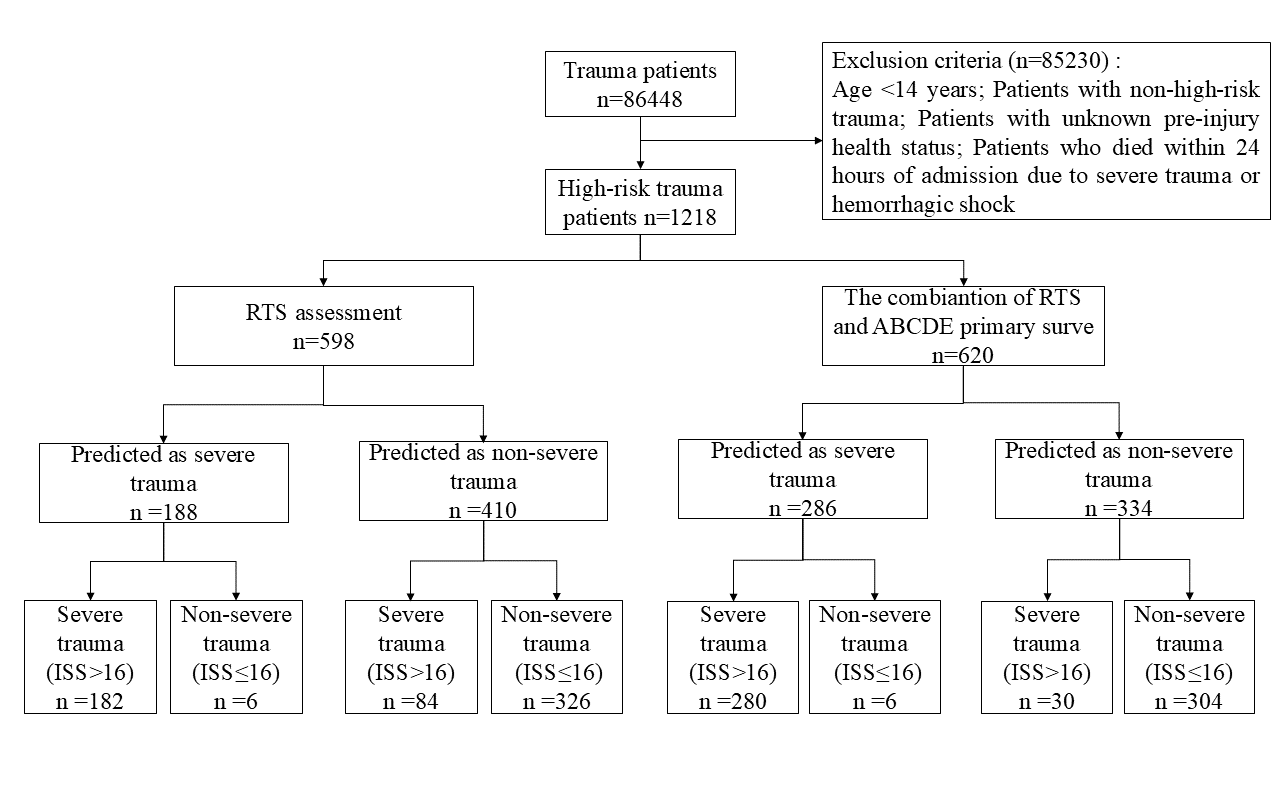
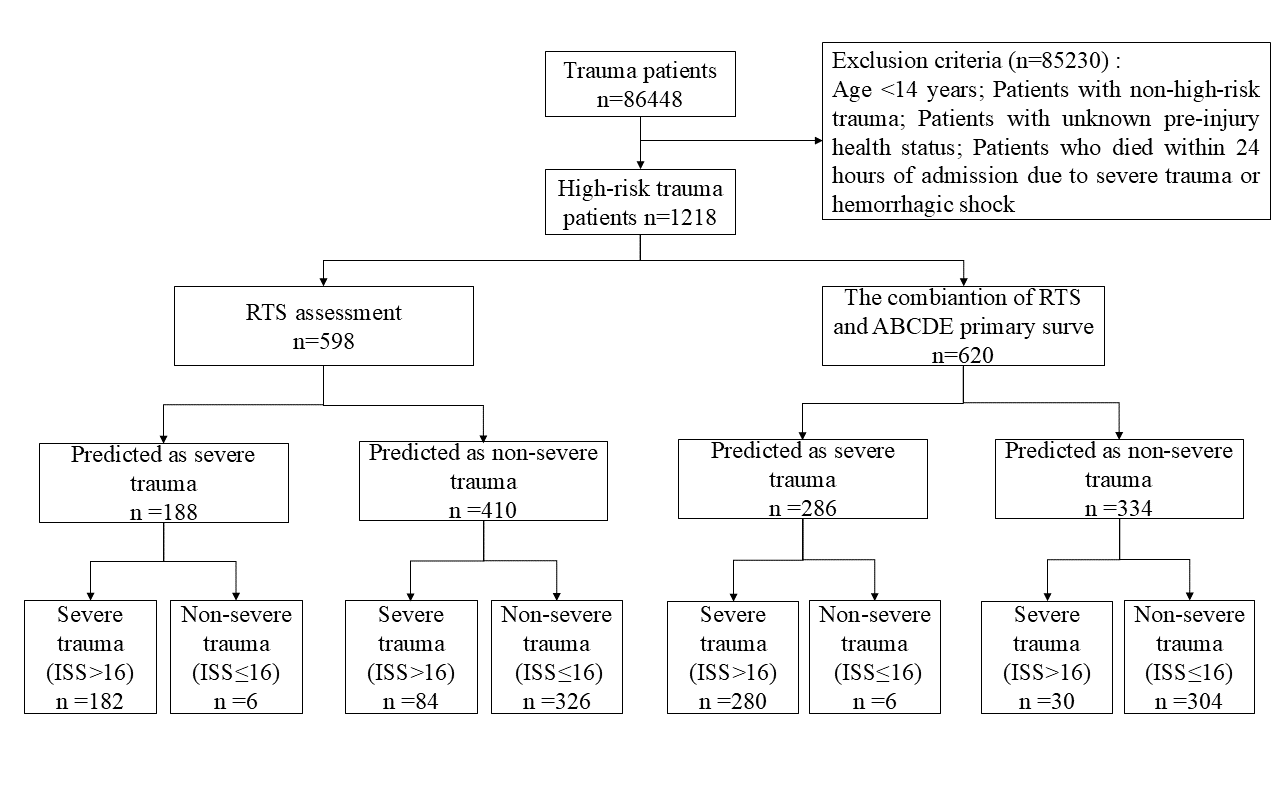
This single-center retrospective study included high-risk trauma patients admitted to the emergency surgery department of our hospital between January 1, 2021, and December 31, 2024. High-risk trauma was defined as trauma primarily resulting from traffic accidents or falls and associated with multiple injury sites Inclusion criteria: (1) Age ≥14 years, based on local regulations and availability of medical resources; (2) Patients without documented severe pre-existing conditions that could markedly affect acute trauma management, confirmed by medical records; (3) Admission within 24 hours after trauma. Exclusion criteria: (1) Age <14 years; (2) Patients with non-high-risk trauma; (3) Patients with unknown pre-injury health status; (4) Patients who died within 24 hours of admission due to severe trauma or hemorrhagic shock (these cases were excluded to maintain consistency of clinical workflow evaluation). A total of 1,218 patients who met these criteria were divided into two groups: the control group (n = 598, 2019–2021), assessed using the RTS alone, and the study group (n = 620, 2022–2024), assessed using RTS combined with the ABCDE primary survey (Figure 1).
2.2. Methods
Trauma assessment upon admission was conducted by the first healthcare professional who saw the patient in the emergency department. The control group underwent assessment by triage nurses using RTS, calculated from GCS, systolic blood pressure (SBP), and RR. Scores ranged from 0 to 7.84, corresponding to survival probabilities of 0.027 to 0.988. Four urgency levels were assigned: scores 0–4 indicated critical injury (Level 1) requiring immediate intervention; scores 4–6 indicated severe trauma (Level 2) requiring intervention within 10 minutes; scores 6–7 indicated moderate trauma (Level 3) requiring consultation within 30 minutes; scores 7–7.84 indicated minor trauma (Level 4), and patients were directed to the waiting area.
The combined RTS and ABCDE primary survey was applied to perform a dual assessment.18 Patients in the study group were assessed by triage nurses and emergency physicians upon admission. Nurses performed GCS scoring, measured vital signs, and recorded data in the hospital information system (HIS). Physicians conducted structured ABCDE evaluations of airway, breathing, circulation, neurological status, and environment/exposure.19 Specific procedures included confirming airway patency, checking RR and pattern, measuring blood pressure and heart rate to assess circulation, evaluating neurological status via patient response to simple commands, and documenting environmental exposure to determine temperature control needs. Triage labels were applied accordingly, and patients identified as severe trauma (Levels 1–2) were prioritized according to existing departmental protocols.
Additionally, a “suspected severe trauma” option was introduced. Selecting this option immediately triggered a consultation with the major trauma team for further clinical evaluation. All medical staff involved underwent standardized training and followed standard operating procedures (SOPs) to ensure consistency. Discharge diagnoses for both groups relied on imaging studies [X-ray, Computed Tomography (CT)] and intraoperative findings. Severe trauma was identified using the Injury Severity Score (ISS) as the reference standard for injury severity classification.20 ISS assesses trauma severity in six body regions: head/neck, face, chest, abdomen, extremities, and skin. Injuries in each region were scored from 1 (mild) to 6 (non-viable). ISS was calculated by summing squares of the three highest Abbreviated Injury Scale (AIS) scores: ISS = AIS12 + AIS22 + AIS32. Severe trauma was defined as ISS > 16.
2.3. Observation indicators
The primary observation indicators included gender, age, GCS, RTS, trauma site, intensive care unit (ICU) admission rate, ISS score, triage level, triage completion time, imaging examination time, ED time, number of emergency surgeries, number of patients transferred to surgery within one hour of arrival, mortality rate, missed diagnosis rate, and accuracy of severe trauma prediction. Triage time was defined as the duration from patient admission to completion of the initial trauma assessment. Imaging time was defined as the interval between physician order and completion of imaging studies. ED time was defined as the interval from admission to departure from the emergency department. Missed diagnoses referred to trauma diagnoses documented at discharge or death that were absent from initial emergency department records. Accuracy of severe trauma prediction was calculated as the proportion of cases in which predicted severity classification was consistent with ISS-based severity classification. All indicators were evaluated with reference to ISS-based severity classification (ISS > 16). Additionally, the patient selection process documented total admissions and inclusion/exclusion ratios.
2.4. Statistical methods
Statistical analysis was performed using SPSS 22 software. Continuous variables with normal distribution were expressed as mean ± standard deviation (±s) and compared using independent samples t-tests. Continuous variables without normal distribution were expressed as median [M (P25–P75)] and compared using Mann-Whitney U tests. Categorical variables were expressed as percentages and compared using chi-square or Fisher’s exact tests. Multivariate adjustment using logistic regression analysis controlled potential confounders (time effects, operator experience, equipment updates). A P-value <0.05 was considered statistically significant.
3. Results
3.1. Demographic and baseline characteristics of high-risk trauma patients
A total of 86,448 patients were admitted to the emergency department of a tertiary hospital in Xiamen from January 1, 2021, to December 31, 2024. After excluding non-eligible cases, 1,218 high-risk trauma patients met the inclusion criteria. These included 598 patients in the control group (RTS only) and 620 patients in the study group (RTS combined with ABCDE primary survey). Among all high-risk trauma patients, 53.53% were male, with most being young and middle-aged adults (mean age: 40.17 ± 14.28 years). Males accounted for a higher proportion (70.03%) among severe trauma cases. Baseline GCS scores ranged from 3 to 15 points in both groups, averaging 12.72 ± 2.74 points in the control group and 12.98 ± 2.78 points in the study group. No significant differences existed between groups regarding injury sites (head/neck, face, chest, abdomen, extremities, superficial injuries; P = 0.982), indicating balanced baseline distributions. The proportion of patients classified as Level 1–2 injuries was higher in the study group (42.9%) compared to the control group (31.44%) (P < 0.001), suggesting a difference in triage severity distribution between groups. Statistical analysis of baseline characteristics showed no significant differences in gender, age, GCS scores, trauma mechanisms, or injury sites (P > 0.05), except for triage level (Table 1).
3.2. Comparison of emergency treatment times, ICU admission rates, and mortality rates between control and study groups
All emergency treatment time metrics were obtained from electronic medical records and independently verified by two reviewers. RTS scores showed no statistically significant difference between the control and study groups (6.84 ± 1.18 vs. 6.95 ± 0.89, P = 0.175). Mean triage completion time was longer in the study group (8.31 ± 2.47 minutes) than in the control group (6.54 ± 2.13 minutes), representing an increase of 1.77 minutes (P < 0.001). Imaging examination time was shorter in the study group (20.71 ± 6.32 minutes) compared with the control group (30.69 ± 8.15 minutes), representing a reduction of approximately 9.98 minutes (P < 0.001). ED time also decreased in the study group (96.75 ± 19.68 minutes) compared with the control group (114.07 ± 22.54 minutes), a reduction of approximately 17.32 minutes (P < 0.001). The emergency surgery rate was higher in the study group (45.48% vs. 39.13%, P < 0.001), as was the proportion of patients transferred to surgery within one hour of arrival (31.61% vs. 18.39%, P<0.001). ICU admission rates did not differ significantly between groups (50.83% vs. 51.29%, P = 0.874). Mortality rates were lower in the study group (2.58% vs. 6.02%, P = 0.003) (Table 2).
3.3. Comparison of missed diagnosis rates and prediction of severe trauma
A missed diagnosis refers to major trauma identified in discharge or death records but not documented in initial emergency department records.21 The control group had 28 misdiagnosed cases (4.5%), including 1 left first metatarsal fracture, 1 right second metatarsal fracture, 1 left scaphoid fracture, 1 fourth metacarpal fracture, 2 sacrococcygeal fractures, and 22 abdominal organ injuries (8 splenic contusions, 6 hepatic contusions, 4 right renal contusions, and 4 small bowel injuries). The study group had 10 misdiagnosed cases (1.61%), including 1 left little finger fracture, 1 right lateral malleolus fracture, and 8 abdominal organ injuries (2 splenic contusions, 4 hepatic contusions, 2 small bowel injuries). The missed diagnosis rate was lower in the study group (P = 0.029). The actual number of severe trauma cases (ISS > 16) was 266 (44.48%) in the control group and 330 (50.00%) in the study group, without a statistically significant difference (P = 0.054). However, the proportion of patients predicted as having severe trauma was higher in the study group (46.13% vs. 31.43%, P < 0.001). The prediction accuracy rate for severe trauma was higher in the study group (P < 0.001). These findings suggest differences between groups in diagnostic and prediction-related indicators. Given the retrospective single-center design, causal interpretations should be made with caution. Overall, combining RTS with the ABCDE primary survey was associated with variations in emergency department indicators, including missed diagnosis rates and prediction performance (Table 3).
4. Discussion
Severe trauma remains a major global public health challenge, and emergency departments, as the frontline of trauma care, require rapid, accurate assessment methods to optimize patient management workflows.22,23 This single-center retrospective-controlled study analysed 1,218 high-risk trauma patients from 86,448 total admissions to the emergency surgery department of a tertiary hospital in Xiamen between 2019 and 2024: 598 patients in the control group (RTS only) and 620 in the study group (RTS combined with ABCDE primary survey). The combined RTS and ABCDE approach was associated with differences across several emergency department indicators—shorter imaging examination and ED times, longer triage completion time, lower mortality and missed diagnosis rates, and higher rates of emergency surgery-related indicators in the study group—though these observations indicate association rather than causality. Empirical evidence from China on combined RTS and ABCDE assessment for high-risk trauma remains limited, so this study offers exploratory, single-center evidence of feasibility rather than methodological innovation; the findings are best interpreted as an evaluation of workflow and clinical indicators under routine practice conditions.
The combined RTS and ABCDE approach slightly lengthened triage time, plausibly reflecting the systematic, comprehensive nature of the ABCDE evaluation framework,24,25 in which sequential assessment of airway, breathing, circulation, neurological dysfunction, and exposure is designed to support structured clinical evaluation.26 The higher severe trauma prediction accuracy observed in the study group suggests a possible difference in assessment performance, although the retrospective design precludes definitive interpretation, and the mortality difference between groups should be interpreted cautiously given baseline variation and potential temporal effects.
Several factors may explain the observed differences in imaging and ED times: structured assessment processes may influence clinical decision pathways and prioritisation, team coordination and parallel workflow execution may differ under protocol-driven evaluations, and systematic clinical examination may reduce diagnostic uncertainty in some scenarios—though these interpretations remain speculative and were not directly tested here. The combined RTS and ABCDE method was also associated with differences in the detection of certain injuries, including abdominal organ injuries.
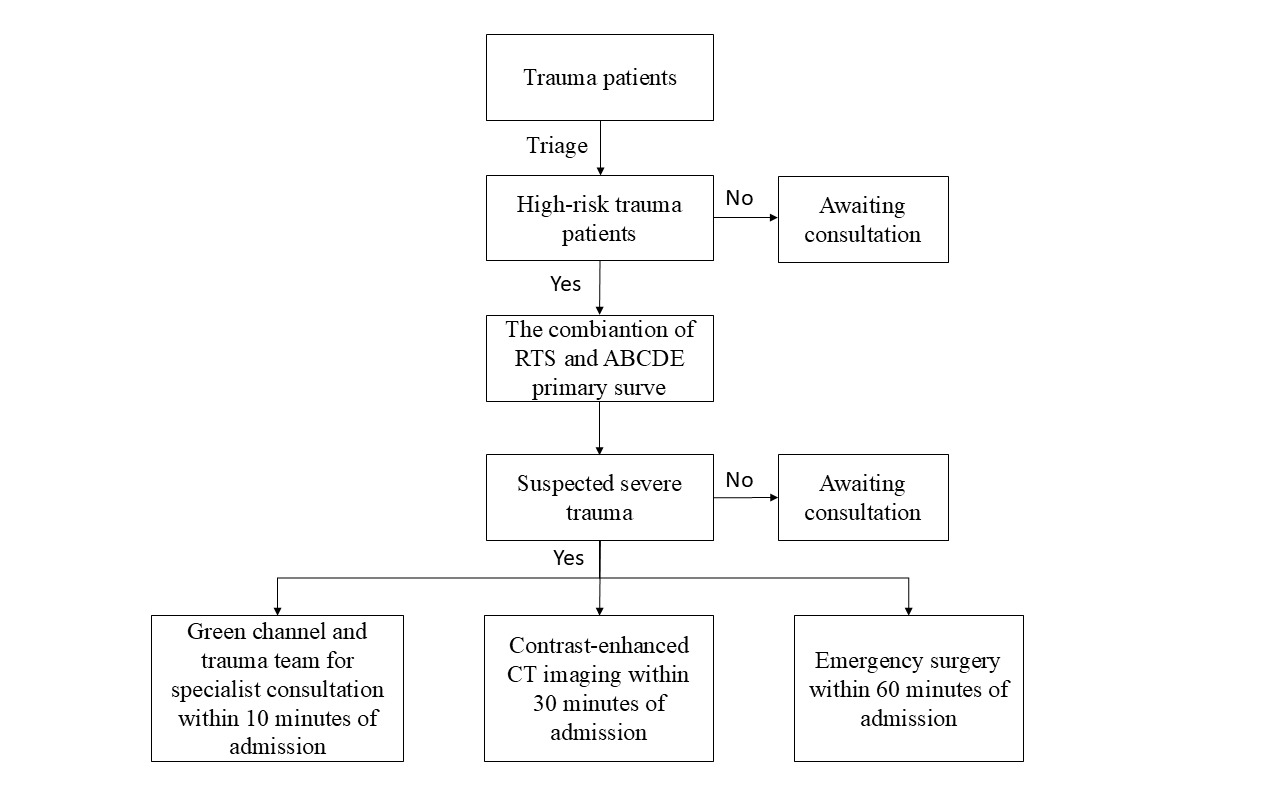
The combined assessment approach integrates RTS and ABCDE evaluations and may offer complementary clinical perspectives24,27: RTS enables rapid physiological screening, while ABCDE provides a structured clinical framework,28 although its potential advantages require confirmation in prospective studies.29–31 The observed differences in emergency surgery indicators and mortality should not be interpreted as definitive evidence of effectiveness. Clinical management in the study group followed an institutional workflow framework for high-risk trauma patients (Figure 2): during the study period, patients identified by triage nurses as high-risk injuries were immediately transferred to the resuscitation room, where emergency physicians and nurses jointly conducted the combined RTS and ABCDE assessment. For patients with suspected severe trauma (ISS > 16), intravenous access was immediately established. Blood pressure targets were managed according to routine clinical practice, including systolic blood pressure maintenance at 80–90 mmHg for patients without traumatic brain injury (TBI). For patients with severe TBI (GCS ≤ 8), systolic blood pressure was maintained above 110 mmHg or mean arterial pressure (MAP) above 80 mmHg. Time-related management targets, including specialist consultation, imaging evaluation, and surgical decision-making, were implemented based on existing departmental procedures.
This study has several potential clinical implications. The combined RTS and ABCDE assessment model is a structured evaluation approach that may be applicable in emergency department settings: integrating quantitative screening with systematic assessment was associated with shorter imaging examination and ED times, lower missed diagnosis rates, and higher severe trauma prediction accuracy, although the observed differences in mortality and surgery-related indicators should be interpreted cautiously given the retrospective design. The combined assessment may provide supplementary risk-stratification information to assist clinical decision-making, but the present findings do not establish superiority or causal effectiveness. This model may nonetheless be of interest to emergency departments, particularly those with resource constraints or workflow variability, pending further validation before broader clinical generalisation.
4.1. Limitations
This study has several limitations. First, as a single-center retrospective controlled study spanning different time periods for the control and study groups, temporal effects and confounding factors (e.g., hospital process optimisation, variation in staff experience, or equipment upgrades) may have influenced the findings. Second, patients under 14 years of age were excluded, limiting generalisability. Third, the retrospective design inherently limits causal inference, so observed between-group differences may reflect multiple contributing factors; hard endpoints such as mortality, ICU admission, and complications were not primary outcomes, and although a lower mortality rate was observed in the study group, the design does not permit definitive conclusions about outcome effects. Future multicenter, prospective studies are warranted to validate these observations. In summary, this study identifies associations between assessment strategy and selected clinical indicators, but definitive conclusions regarding effectiveness require further investigation.
5. Conclusion
This study suggests that combining RTS with the ABCDE primary survey is associated with differences in selected emergency department indicators among high-risk trauma patients, offering a structured evaluation framework that may support clinical assessment and workflow management; the observed differences in missed diagnosis rates and time-related indicators should nonetheless be interpreted cautiously given the retrospective, single-center design. Rather than establishing a standardized protocol, these findings reflect institutional practices implemented during the study period, and while the integration of RTS and ABCDE assessments may offer complementary clinical perspectives, definitive conclusions regarding effectiveness or outcome benefits cannot be drawn from the present study. Future multicenter, prospective studies are warranted to validate these observations across diverse clinical settings and populations, and to further examine potential associations with clinical outcomes, including mortality, ICU admission rates, and long-term prognosis.
Ethics approval and consent to participate
The study was reviewed and approved by the Medical Ethics Committee of Xiamen Chang Gung Hospital On January 10, 2024 (Approval No.: XMCGIRB2023121), The study was conducted in accordance with the principles of the Declaration of Helsinki. Informed consent was waived due to the retrospective design and anonymized nature of the data.
Funding
The study received no specific funding from any public, commercial, or not-for-profit organization.
Acknowledgments
Not applicable
Data availability
The datasets generated and/or analyzed during the current study are available from the corresponding author upon reasonable request.
Declaration of Competing Interests
The authors declare that they have no competing interests.